From Border Tension to Sacrilege: How Power Became Crime
 From Border Tension to Sacrilege: How Power Became Crime
By Dr. Thourn Sinan
Tourism & Spiritual Professional
Hebei-China
What began as a border dispute has crossed every moral line.
First came tension—maps, statements, pressure.
Then conflict—force replacing dialogue.
Then invasion—airstrikes and deep-territory attacks.
Then crime—looting, killing, mass displacement.
Now, something even darker: the violation of the sacred.
Since violence escalated, over half a million Cambodians have been driven from their homes. Families sleep in open fields with no proper shelter, clean water, electricity, sanitation, or reliable food. Children drink unsafe water. Elderly people collapse from exhaustion. Pregnant women give birth without medical care. This is not accidental displacement; it is homelessness imposed by force.
Against this humanitarian collapse came an act that pierced the soul of the region: the destruction of a Lord Vishnu statue on the Cambodian side of the border. This is not a technical adjustment. It is not “administrative.” It is cultural violence.
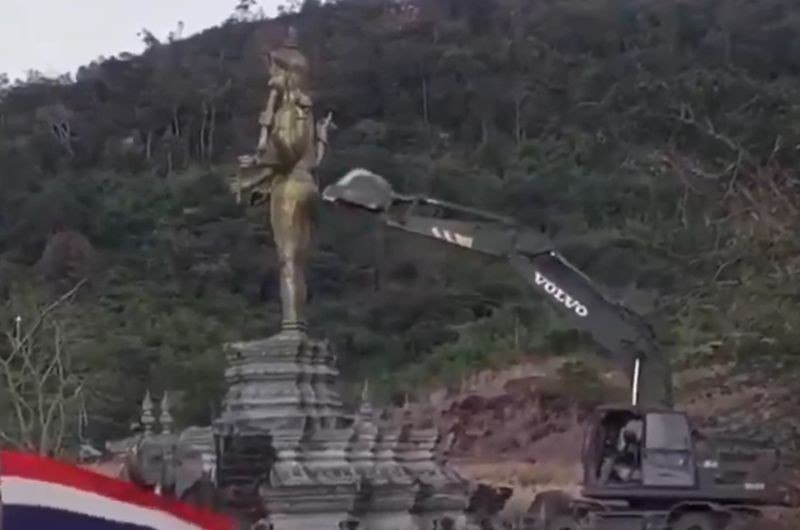
Lord Vishnu does not belong to one nation alone. He is part of a civilizational inheritance that shaped Southeast Asia—its ethics, kingship, art, and faith—long before modern borders. Cambodian culture itself grew from centuries of Hindu–Buddhist harmony, preserved in temples, carvings, and sacred symbols that generations protected precisely to prevent such desecration.
To tear down a sacred symbol and explain it away as “security” is not clarification; it is erasure. It replaces reverence with power and calls it order. This is how disputes rot—when force learns to speak the language of contempt.
To the state of Thailand, this must be said plainly: you cannot claim dignity on the global stage while humiliating the sacred; you cannot speak of peace while deepening wounds—from homes to heritage; you cannot restore honor by reframing what should never have been done.
This is not a religious war. It is a warning about what happens when power forgets limits—when border tension becomes invasion, invasion becomes crime, and crime reaches for the sacred.
A Call to Hindu–Buddhist Conscience Worldwide
This moment now belongs to the global Hindu and Buddhist community.
We ask Hindus and Buddhists everywhere to watch closely, to remember, and to reflect. When sacred heritage is destroyed, when civilians are displaced, silence becomes complicity.
Before buying Thai products, pause.
Before choosing Thailand as a destination, think.
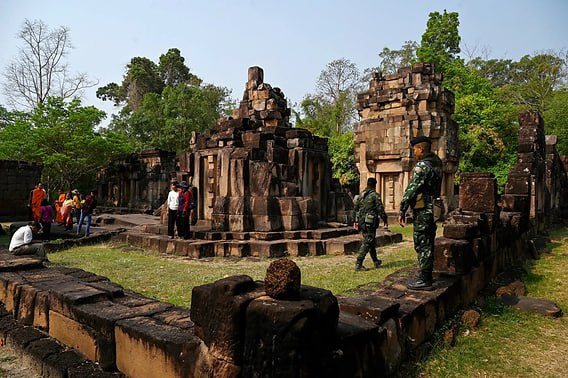
Think about temples placed at risk.
Think about statues torn down.
Think about the over half a million Cambodians living without shelter, water, or dignity.
Think about how tension became conflict, conflict became invasion, invasion became crime—and crime reached the sacred.
This is not hatred. It is moral awareness. Peaceful, ethical boycotts are not punishment; they are a language of conscience. They remind states that power has limits—and that sacred symbols are not obstacles to be removed.
Cambodia does not ask the world to fight. It asks the world to draw a line.
Because when gods are dragged down by machines, it is not only statues that fall.
It is the moral standing of those who ordered it.
And history remembers that.