Silence, Law, and Complicity: Why ASEAN and the World Are Failing Cambodia
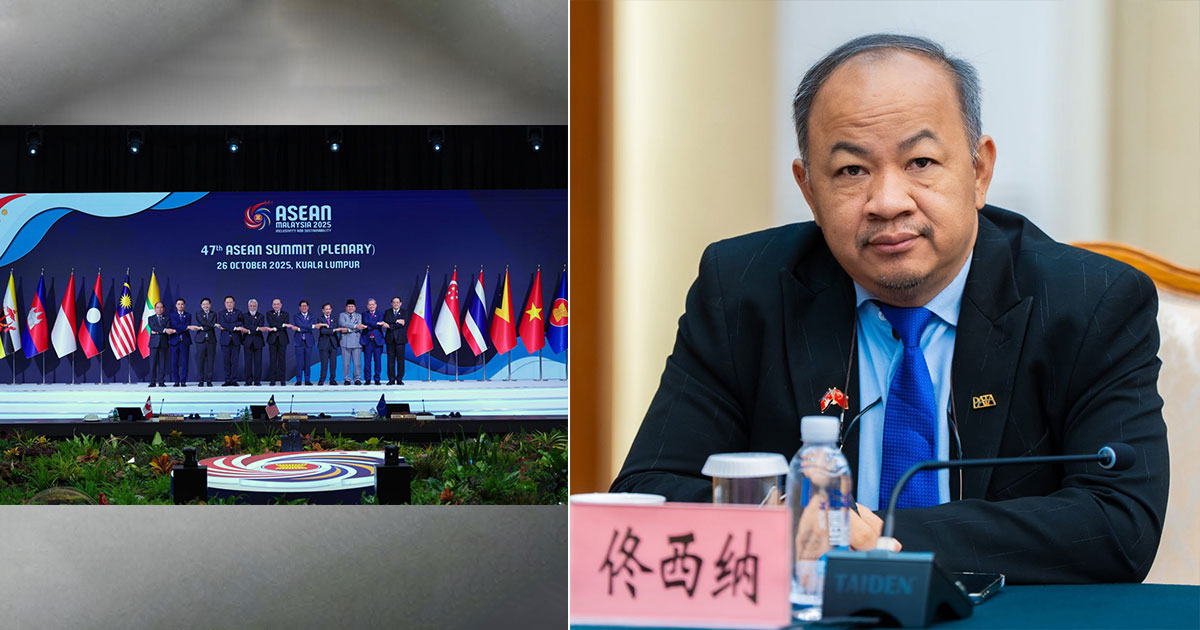 Silence, Law, and Complicity: Why ASEAN and the World Are Failing Cambodia
By Dr. Thourn Sinan
Tourism & Spiritual Professional
Phnom Penh, Cambodia — 19 December 2025
History will not only judge those who ordered bombs to fall on Cambodian soil.
It will judge those who knew the law, saw the crimes, and chose silence.
Thailand’s actions against Cambodia are no longer debatable as “tensions” or “escalations.” They constitute a clear violation of ASEAN law, international law, and the most basic principles of humanity. The question confronting ASEAN and the world today is no longer what is happening, but why it is being tolerated.
ASEAN’s Own Law Has Been Broken
ASEAN leaders do not lack a legal framework. They lack courage.
Under the ASEAN Charter (2007), Article 2(2), member states are bound by fundamental principles, including:
- Respect for sovereignty and territorial integrity
- Non-use of force
- Peaceful settlement of disputes
- Adherence to international law
Thailand’s invasion of Cambodia—daily airstrikes using F-16 and Gripen fighter jets, deep bombardment 80–130 km inside Cambodian territory, destruction of civilian infrastructure, and killing of civilians—directly violates these principles.
Even more damning, Thailand repeatedly violated peace agreements witnessed by the President of the United States and the ASEAN Chair, first on 29 July with the kidnapping of 18+2 Cambodian soldiers, and again on 7 December, when large-scale air attacks resumed. This is not a misunderstanding. It is a pattern of bad faith and treaty violation.
ASEAN cannot claim to be a rules-based community while allowing one member to openly shred its founding charter.
While the ASEAN Charter does not explicitly use the word “expulsion,” it does provide mechanisms for addressing serious breaches, including:
- Article 7 (Role of the ASEAN Summit in addressing serious situations)
- Article 20 (Special measures when consensus cannot be reached)
If ASEAN cannot even consider suspension, isolation, or collective measures against a member that invades another member, then ASEAN law is reduced to decoration.
A community that refuses to defend its own rules is not a community. It is a convenience club.
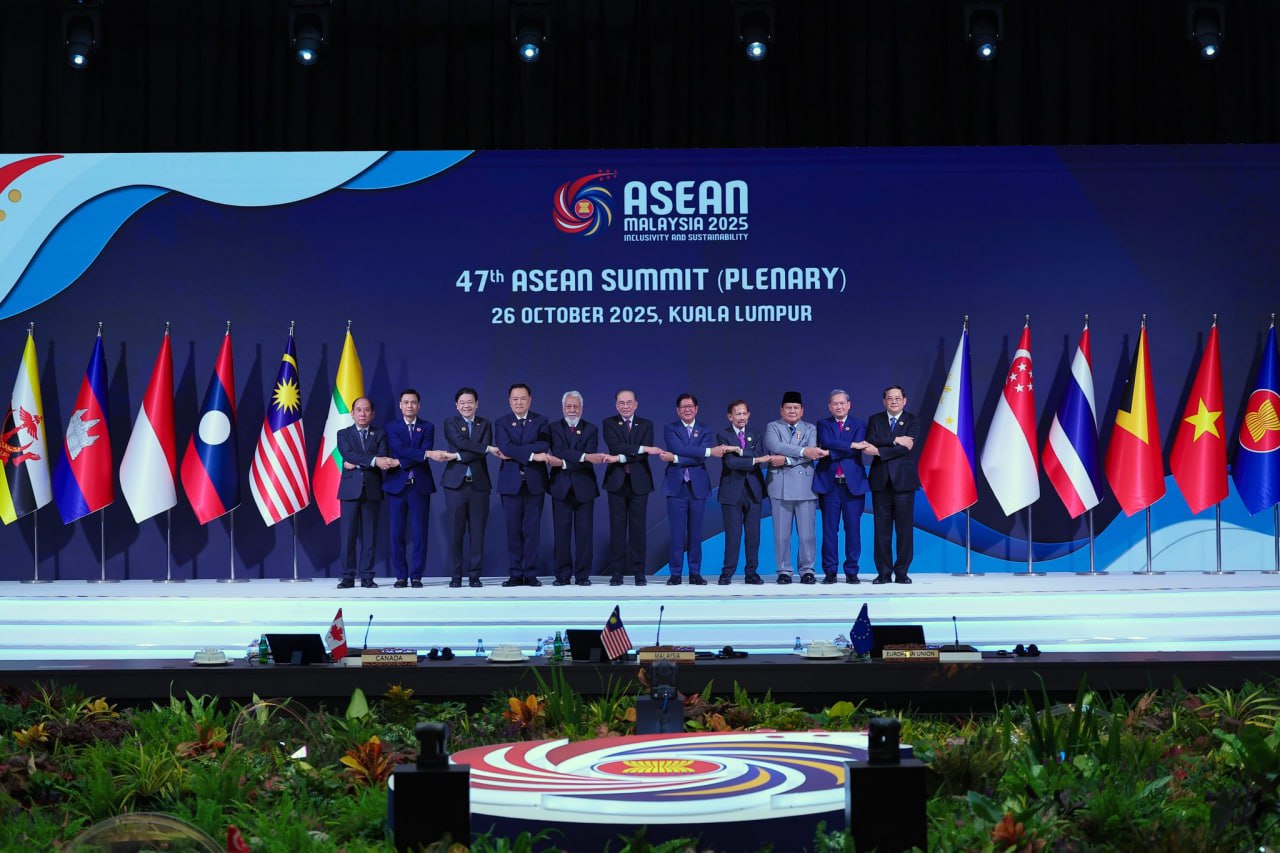
The World’s Double Standard Is Exposed
ASEAN leaders have loudly condemned Israel’s actions in Gaza.
They have forcefully condemned Russia’s invasion of Ukraine.
They invoked international law, sovereignty, and civilian protection.
Yet when Cambodia—a small ASEAN state with a weaker economy and limited military—is invaded by a stronger neighbor, those same voices fall silent.
Is international law only enforceable outside Southeast Asia?
Is condemnation reserved for wars involving major powers?
Or is silence the price paid by small nations?
This inconsistency is not diplomacy. It is moral collapse.
This Is an International Crime, Not a Regional Dispute
Thailand’s actions meet the threshold of international crimes.
Under the UN Charter, Article 2(4), the use of force against the territorial integrity or political independence of another state is prohibited. Thailand’s deep airstrikes inside Cambodia are a textbook violation of this rule.
Under the Rome Statute of the International Criminal Court (ICC):
- Article 8 defines war crimes, including attacks on civilians and civilian objects (homes, schools, hospitals, religious and cultural sites).
- Article 12 allows ICC jurisdiction over crimes committed on the territory of a State Party.
Cambodia is a State Party to the ICC. Crimes committed on Cambodian territory therefore fall within ICC jurisdiction, regardless of the nationality of the perpetrators.
This means the world does not lack legal tools. It lacks political will.
When civilians are killed, pregnant women give birth in displacement camps, cultural heritage is damaged, and peace agreements are deliberately violated, impunity becomes a global crime.
Silence Is No Longer Neutral
ASEAN leaders often hide behind the principle of “non-interference.” But non-interference was never meant to protect invasion. It was never meant to excuse war crimes. It was never meant to silence justice.
Silence today tells the aggressor: continue.
Silence tells the victim: you are alone.
Silence tells future generations: law only applies when convenient.
Only Malaysia, as ASEAN Chair, has shown moral leadership by working relentlessly to mediate. Only the United States and China, despite rivalry, have pushed for de-escalation. Brazil, far from this region, has shown more courage than many who call Cambodia a “brother.”
That fact alone should shame Southeast Asia.
A Final Question to ASEAN and the World
What does “One Vision, One Identity, One Community” mean if one member can invade another and face no consequences?
What is ASEAN solidarity worth if it collapses the moment power is tested?
And what will history say of leaders who spoke passionately about justice in Gaza and Ukraine, but remained silent while Cambodia burned?
This is not about revenge.
This is not about hatred.
This is about law, humanity, and the survival of credibility.
If ASEAN will not enforce its own charter, it risks irrelevance.
If the world will not condemn clear aggression, it risks moral bankruptcy.
Silence may feel safe today.
But tomorrow, it will feel heavy.
Because silence, in the face of invasion, is not neutrality.
It is complicity.
Dr. Thourn Sinan
Tourism & Spiritual Professional
Kingdom of Cambodia